| Mahajanapada | Capital City | Modern Location | Key Historical Significance & UPSC Anchors |
|---|
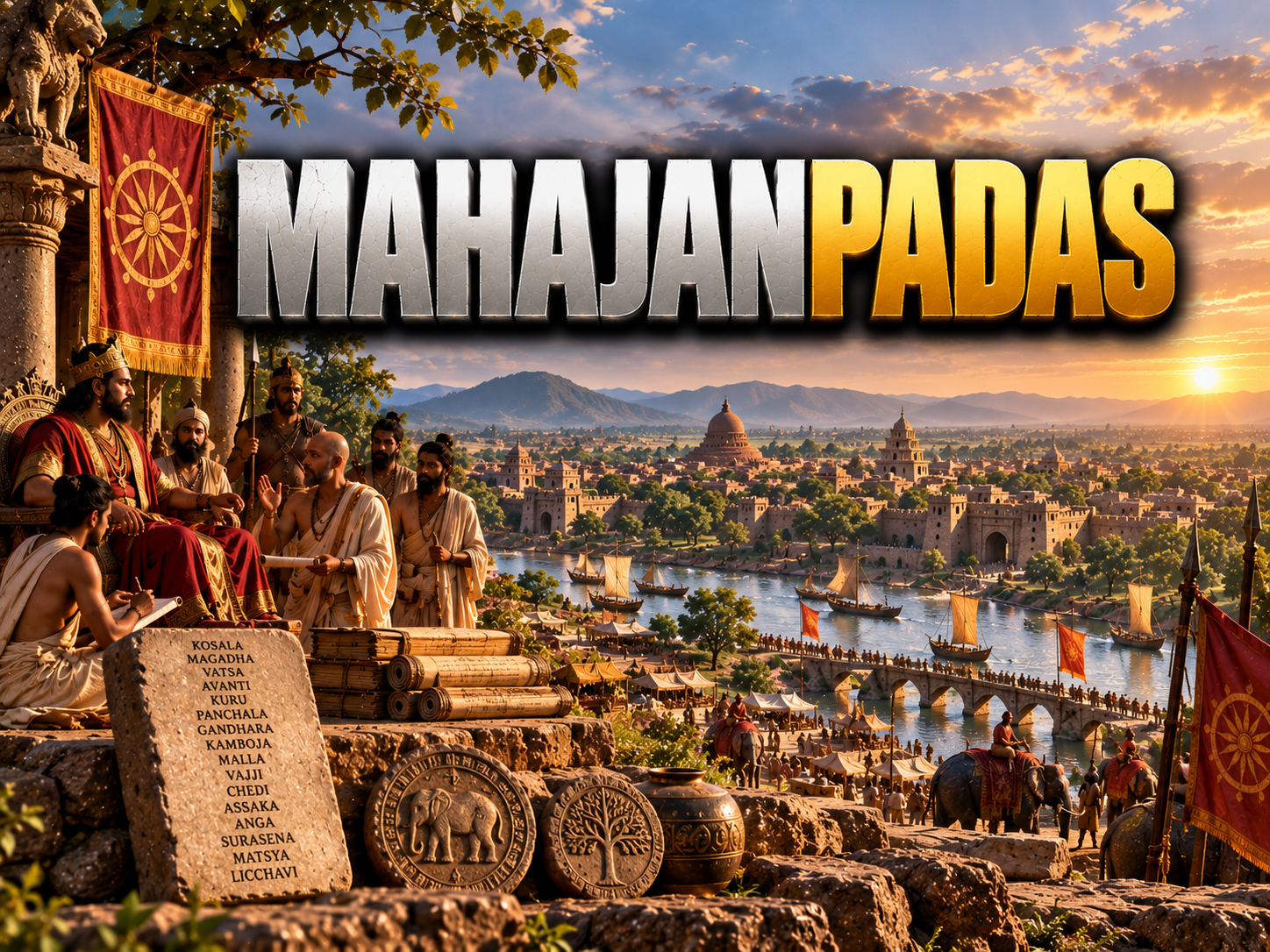
| Magadha | Girivraja / Rajgir (later Pataliputra) | Patna & Gaya districts, Bihar | Emerged as the supreme imperial power; bounded by rivers Ganga, Son, and Champa. |
| Anga | Champa (earlier Malini) | Munger & Bhagalpur, Bihar | Major riverine port for maritime trade; annexed early by Bimbisara. |
| Vrijji (Vajji) | Vaishali | Muzaffarpur & Vaishali, Bihar | Famous 8-clan republican confederacy (including Licchavis, Jnatrikas, Videhas). |
| Kashi | Varanasi | Varanasi region, UP | Famous for cotton textiles and horse trade; initially dominant before Kosalan conquest. |
| Kosala | Shravasti (North) / Saket (South) | Eastern UP (Awadh / Ayodhya) | Ruled by King Prasenajit; contained important towns like Ayodhya and Kapilavastu. |
| Malla | Kusinara & Pawa | Deoria & Gorakhpur, UP | Republican state; site of Buddha's Mahaparinirvana (Kusinara) and Mahavira's Nirvana (Pawa). |
| Vatsa | Kausambi | Prayagraj (Allahabad) region, UP | Located at junction of trade routes; ruled by King Udayana (hero of Bhasa's plays). |
| Chedi | Shuktimati / Sotthivati | Bundelkhand region, UP/MP | Mentioned in Mahabharata (ruled by Shishupala); located along the Ken River. |
| Kuru | Indraprastha / Hastinapur | Delhi, Meerut & Thanesar | Shifted from monarchical to republican form by the 6th century BCE. |
| Panchala | Ahichchhatra (North) / Kampilya (South) | Rohilkhand region, UP | Famous center of Later Vedic scholarship; later adopted a republican constitution. |
| Surasena | Mathura | Mathura region, UP | Center of Yadava/Vrishni clan (associated with Krishna); King Avantiputra was a Buddhist patron. |
| Matsya | Viratanagara (Bairat) | Jaipur, Alwar & Bharatpur, Rajasthan | Located in semi-arid zone; associated with Pandava exile lore. |
| Avanti | Ujjain (North) / Mahishmati (South) | Malwa region, MP | Chief rival of Magadha; famous ruler Pradyota (Chanda Pradyota); major ironworking center. |
| Assaka (Ashmaka) | Potana / Podana / Bodhan | Godavari valley, Telangana/Maharashtra | Only Mahajanapada situated south of the Vindhya mountains. |
| Gandhara | Taxila (Takshashila) & Pushkalavati | Peshawar & Rawalpindi, Pakistan | Renowned international university center (Taxila) and overland trade gateway. |
| Kamboja | Rajapura / Poonch | Hazara / Hindu Kush, J&K / Afghanistan | Famous for breeding high-quality horses and war cavalry; organized as a *Varta-Sastropajivi* republic. |